Passion vs Profession
Figuring out what your next educational step is? We need to talk about it...

Before I start posting other content, I must address something I believe is essential to discuss with anyone considering further study and majoring in a particular subject.
As I mentioned in my first post, I graduated with a bachelor’s degree in graphic design communication. Since childhood, the thought of studying something creative at university was a no-brainer. However, as I have previously said, university didn’t quite go the way I had dreamed it would. I was filled with regret when I left and wondered whether I had wasted 4 years of my life when I could have dedicated that time to building other skills that would genuinely prepare me for post-graduate life.
This year, my younger sister is completing her A-Level exams and with that comes the most famous question for a student: “So what are you planning to do next?” Well, as a devoted big sister, I drew on my experience and asked her a question I wish someone had asked me when I was at that stage of life. The question was:
Do you want to study something you’re passionate about or something you want to make your profession?
What do I mean by this?
According to the Cambridge Dictionary, the definition of the word ‘Passionate’ means 'having very strong feelings or emotions'. Let’s create an example for the context of this conversation. Say you're passionate about history. You get excited about discovering new facts, memorising dates of significant events, or maybe you like to see how the actions of those in the past now affect how we function as a society today. If you were to select your degree based on passion, it’s likely you would go on to study a history degree. But what about it as a profession?
The Cambridge Dictionary defines ‘Profession’ as 'any type of work that needs special training or a particular skill, often one that is respected because it involves a high level of education'. Let’s continue with the history degree example. A history degree can teach you skills such as critical thinking, research, and communication, all of which are important in any career. However, it’s important to consider how a degree as specific as history would help you land a career in something you are pleased to work in and provide financial stability. If your goal is to become a historian, though it is not impossible, it is rare and therefore may pose issues when looking for employment. Most individuals who major in history go on to study or work in something related, like law, in order for their degree to be more versatile. The most common jobs that history graduates get employed for include education, business and law. The point is, it’s a rather niche degree, so if you are certain you wish to study something so specific, it’s worth thinking of how you would use it in future.
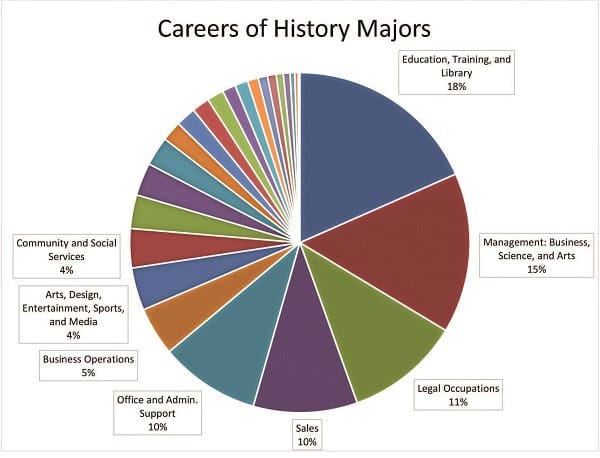
Now, I want to make it clear. I’m not saying that you can’t have a profession in something you’re passionate about or that you shouldn’t study something you’re passionate about. In an article from UCAS, it was revealed that 'Almost all (99%) said their choices at school were influenced by how much they enjoyed the subject - also the primary driver of degree choice.'. Many people go on to pursue a career that is directly linked to their passion(s). What I am trying to communicate is that it’s important not to just think of your degree as an opportunity to study something you enjoyed in secondary school. You have to give some thought to the bigger picture. How will you use this degree? Have you researched what careers would benefit from this degree? Would you have to potentially go on to study something else in order for the degree to become more useful? Will this degree help you achieve the goals you have for the future? And of course, the question that may seem silly at first, but is 100% necessary, will this degree pay for itself in the end?
This is important to consider because, even if you don’t necessarily aspire to earn 6-figures, you still have to pay off a huge amount of student loan debt (unless, of course, you are blessed to pay for your course upfront). In an article released by the UK Parliament in 2025, they state that in 2024, 'The average debt among borrowers who finished their course in 2024 was £53,000'. And it doesn’t stop there. After you graduate, that number will continue to increase with interest and could take up to 40 years to pay off, depending on your income. So, although you may only borrow £50,000 from Student Finance, you could end up paying something along the lines of £90,000 by the time you pay it all off.
All of this is important to consider when selecting a degree. Is what you wish to graduate in going to enable you to find solid work that will take care of your everyday needs, your future goals and pay off outstanding student debt?
There is another point to this discussion, and it stems from my own personal experience. When I selected graphic design, I already knew that there would be jobs. Graphic design is essential for building brands and businesses, so as long as people are creating new startups or developing their existing companies, there is constant demand for graphic designers. The point is, I wasn’t concerned about whether I’d find opportunities. What became an issue for me was realising that what was once a form of expression and relaxation became stressful and was perceived through the lens of ‘work’. So how was I able to decompress after a long day of designing? I suddenly had to find other hobbies. My passion for the arts has started to return after many months of not even wanting to put a pencil to paper, hence why I can write about all of this now and be active again in my artistic endeavours. But I learnt my lesson and wish to share what I learnt in the hopes that it can help support someone who is thinking of what their next steps should be.
And make sure to explore your other options. Maybe a degree is not the best option for you! It’s very common for students to feel pressured to go to university. According to research provided by the Federation of Master Builders (FMB), 'Half of 18-24 year olds felt pressurised by parents, teachers, friends, and/or society in general, to go to university'. Well, let me make this clear: university is not the only option, nor is it the best option for everyone!

Only once I finished university and was desperately seeking guidance on what to do next, did I come across the option of apprenticeships. If you haven’t considered them, please do some research! I had heard the word mentioned in secondary school, but there was a much stronger emphasis on university, so I never truly understood the benefits of one. And I’m not the only one who experienced this. In a report from UCAS, it said, 'UCAS data shows that just under half of registered applicants would like more information about apprenticeship opportunities. Despite this, nearly one in three students have told us that they did not receive any information and advice about apprenticeships from their school.' This is crazy because the benefits of an apprenticeship include: earning a salary as you work for a company, 1:1 professional mentorship and support, no student loan debt as you’ll be funded by your employer and the government, completing it with valuable work experience, receiving a qualification at the end of it (Level 6 Apprenticeships are equivalent to a Bachelor’s Degree at university!) and a high employability rate. Thankfully, anyone over the age of 18 can do an apprentechip and I absolutely would do one now. What’s frustrating is that, had I known of this option, I could have potentially saved myself 4 years of hard work and thousands of student loan debt, and instead be way more prepared for employment.
I know this has been a little bit of a long one, but it’s something that means a lot to me due to my own experiences and knowing that I have a younger relative going through the same process that I, and many others before us, have gone through.
So ask yourself these three questions:
- What is something you don’t mind dedicating yourself to, and what is the best method of education?
- If it stems from a hobby/interest, will it be something you’re okay with transitioning into a work mentality with, or would you prefer it to remain as a form of relaxation?
- Will what you choose to study pay for itself in the future?
I hope all this information provides some good food for thought and helps someone who is getting ready for their next step.
I wish you all the best!
Love,
me.

